
250,000 Devotees in Four Days as Ayodhya Witnesses Historic Ram Mandir Dharma Dhwaj
In the four days following the sacred flag-hoisting ceremony at Ram Mandir in Ayodhya, an estimated 250,000 devotees visited the temple to catch a glimpse of Ram Lalla and participate in darshan — demonstrating the enormous public response after the Dharma Dhwajarohan. The huge turnout reflects the deep emotional and spiritual resonance the ceremony has evoked among believers.

Significance of the Dharma Dhwaj / Dhwajarohan
1- The Dharma Dhwaj refers to the saffron-coloured religious flag hoisted atop the temple spire.
2- The 22-ft × 11-ft triangular flag carries three sacred symbols:
- the “Sun” (representing Lord Rama’s Suryavansha lineage)
- “Om” (ॐ, a primordial spiritual sound)
- “Kovidara tree” — symbolizing shelter, continuity and the flourishing of dharma.
3- The ceremony marked the formal completion of the temple’s main construction, symbolising not just structural completion but a spiritual and cultural culmination for millions who consider the site sacred.
4- The flag was mounted on a specially fabricated 42-foot flagpole attached to the temple’s 161-foot high spire, using modern engineering and durable parachute-grade fabric to withstand weather and wind.

When the Ceremony Happened: Date, Time & How It Unfolded
The Dharma Dhwajarohan ceremony was conducted on 25 November 2025, during the auspicious Abhijit Muhurat (11:45 AM – 12:29 PM). Prime Minister Narendra Modi, RSS chief Mohan Bhagwat, and senior dignitaries participated in the event alongside temple priests.
The ceremony began with traditional Vedic rituals, including:
- Navagraha puja
- Kalash Yatra (procession with sacred water from River Sarayu)
- Yajna (sacrificial rites) rituals
- Special prayers before Ram Lalla
- Chanting of Vedic mantras by Acharyas
Officials described the occasion as “Purnahuti” — the final culmination, not just of construction, but of a long spiritual anticipation.

100 Tons of Flowers to Decorate Ayodhya for the Event
- In the run-up to the ceremony, the city of Ayodhya and the temple complex were adorned with nearly 100 tons of flowers, transforming the temple town into a vibrant, festive spectacle.
- The floral décor — begun days in advance — was meant to honour Lord Rama and create a spiritually uplifting ambiance.
- Workers reported working round the clock over several days to complete the decoration.
- Marigolds and other traditional flowers were arranged carefully, with prayers offered to Lord Ganesh and Lord Rama as part of the ritual preparations.
- The scale of decoration underlined how much significance the temple trust and devotees attached to the ceremony — not just as a religious milestone, but as a public, cultural event meant to invite devotion and pride.
- In addition to decorations, the preparations included a large-scale cleanliness drive across Ayodhya, anticipating the surge of visitors and ensuring the city was ready to welcome devotees from across India.
The massive floral installations were designed to honour Lord Rama and elevate the grandeur of the Dharma Dhwajarohan ceremony.
Prime Minister Narendra Modi words on the event
At the ceremony, Prime Minister Narendra Modi said that with the hoisting of the Dharma Dhwaj, “centuries-old pain put to rest” are healing, long-standing pain is finding closure, and a centuries-old resolve is finally being fulfilled.”
He described the event as a “moment of cultural awakening” — calling the flag a banner of Indian civilisation and saying that Ayodhya is emerging as the backbone of a developed India.
In his address, RSS chief Mohan Bhagwat said the Dharma Dhwaj will not only guide India but can inspire the world — underscoring its spiritual and civilisational significance.
The ceremony, therefore, was not just a religious ritual but a symbolic closure of a long-standing aspiration, and a statement of cultural identity and pride for millions
In Retrospect — How It Began & Why It Happened
The need for Dhwajarohan arose because the temple’s main construction and spire (shikhar) was finally completed by late 2025 under the supervision of the Shri Ram Janmabhoomi Teerth Kshetra Trust.
With the golden shikhar in place — standing 161 feet tall — the ceremonial flag hoisting was scheduled on 25 November 2025, chosen carefully for auspicious tithi and muhurat (Abhijit Muhurat).
Preparations began days earlier: sacred rituals, processions, Pradhan Yajman-led ceremonies, heavy floral decorations across the temple and city, cleanliness drives — all aimed at making the moment worthy of centuries-old sentiment attached to the site.
Thus, the Dhwajarohan was not just an isolated ritual — but a carefully orchestrated spiritual-cultural event, with layered significance: religious, historical, emotional, and societal.

Impact of the Event on Ayodhya
The Dhwajarohan ceremony has had a far-reaching impact:
1. Major boost to religious tourism
Ayodhya recorded one of the highest footfalls since the temple’s inauguration earlier in the year.
2. Economic upliftment
Local businesses—hotels, restaurants, transport and street vendors—reported significant growth.
3. Cultural revival
The event rekindled emotional and cultural pride among devotees nationwide.
4. Increased visibility for Ayodhya
The visual spectacle, decorations and PM’s presence amplified global attention.

Key Takeaways From the Dharma Dhwajarohan Ceremony
- The Dharma Dhwaj symbolises spiritual completeness of the Ayodhya Ram Mandir.
- The ceremony followed ancient Vedic traditions and auspicious muhurat.
- Nearly 100 tons of flowers were used for temple and city decoration.
- PM Modi’s address highlighted closure of historical pain and resurgence of cultural pride.
- Footfall surged dramatically—2.5 lakh devotees in just four days.
- The event strengthened Ayodhya’s emergence as a global spiritual centre.
Conclusion
The Dhwajarohan at Ayodhya’s Ram Mandir — the hoisting of the sacred Dharma Dhwaj on 25 November 2025 — was not merely a ceremonial act, but the culmination of a long-cherished dream, a rekindling of faith, and a renewal of cultural identity for millions. With hundreds of thousands of devotees converging over days, the event has reaffirmed the temple’s place not just in bricks and mortar, but in the hearts of people.
As the saffron flag flutters high above the golden shikhar, it stands not only as a symbol of divine presence, but as a banner of hope, closure, faith and collective resolve — echoing across generations. For the believers, the pilgrimage continues, but their journey has gained new meaning.
As the flag continues to wave above the sanctum of Ram Lalla, it reminds millions that the story of Ayodhya is not just a chapter of the past—
It is a living legacy of devotion, unity and eternal dharma.
For more travel news and cultural updates across India, keep following Zentrail Travel News and our tourism guides on India’s most vibrant destinations.

Your first trek isn’t about proving anything. It’s about experiencing something real. When you go with a Zentrail batch, you’re not just walking trails — you’re joining a tribe.
Still unsure?
DM us on Instagram or drop your questions in the comments below. Our past trekkers love helping first-timers.
Suggested News

Published on
February 14, 2026
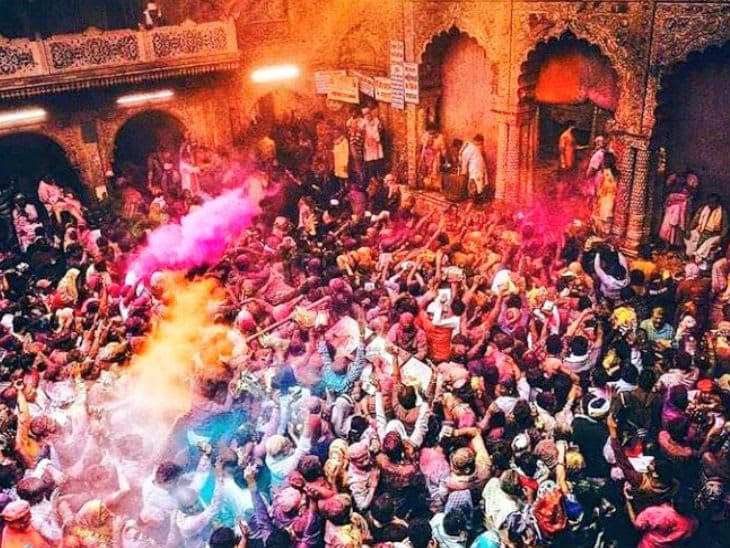
Vraj Ki Holi 2026: The Ultimate Guide to Holi in Mathura Vrindavan 2026
Plan Vraj Ki Holi 2026 with complete Braj Holi dates, Barsana Holi time, Mathura Vrindavan celebrations, travel tips & 40 days Holi details.

Published on
February 6, 2026
Hampi Festival 2026: Guide to Karnataka's Grandest Cultural Heritage Celebration
Discover the magic of Hampi Festival 2026. Explore dates, cultural events, and heritage sites at this UNESCO World Heritage celebration in Karnataka.

Published on
February 4, 2026
Surajkund International Craft Mela 2026 – Complete Travel & Visitor Guide
Checkout the complete guide of surajkund international mela 2026. Dates, tickets, venue, timings, partner nation Egypt, theme states, activities & travel detail

Published on
February 4, 2026
Lingaraj Temple Bhubaneswar Illuminated for Mahashivratri 2026
Lingaraj Temple in Bhubaneswar is illuminated ahead of Mahashivratri 2026 (15 Feb). Explore history, significance, rituals, and FAQs.