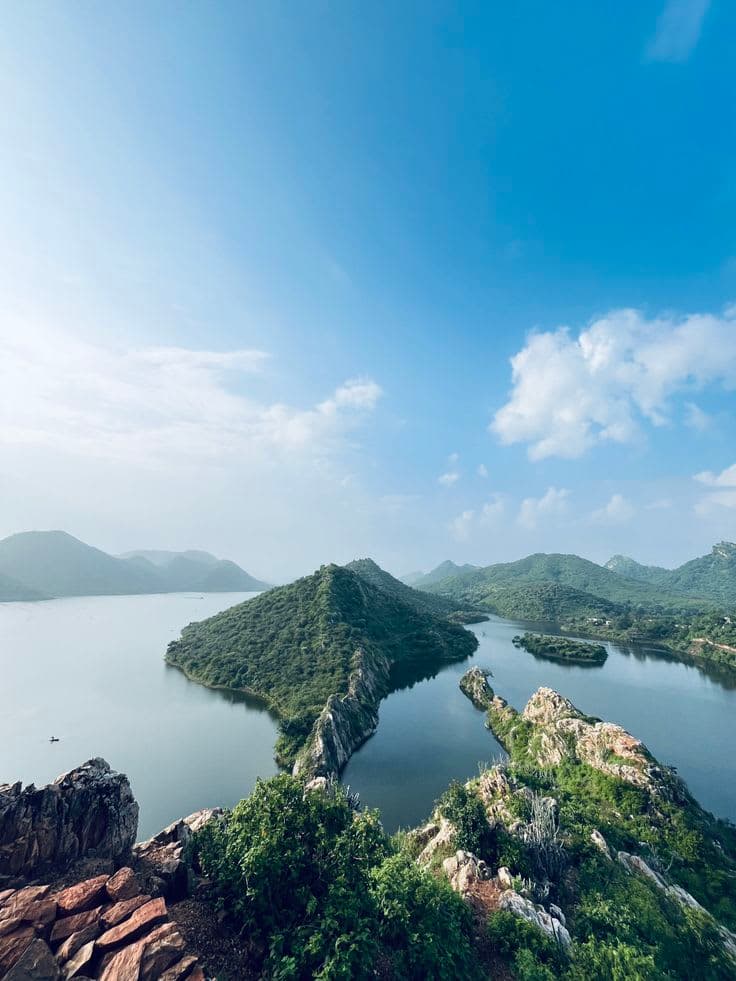
Aravalli Hills Protest Grows After Supreme Court’s New Sparks on Commercial Exploitation
Protests demanding stronger protection for the Aravalli Hills have intensified across Delhi–NCR, Haryana and Rajasthan following a recent Supreme Court order that introduces a new legal definition of what qualifies as the Aravalli range.
Environmental groups, legal experts, tribal communities and urban residents argue that the ruling could sharply reduce the land area recognised as Aravalli, potentially exposing large ecologically sensitive regions to mining, construction, infrastructure projects and real-estate development.
The issue has quickly escalated into a nationwide environmental debate, with activists warning of long-term consequences for air quality, groundwater, desertification and climate resilience in north-western India.
upreme Court Order and the New Definition of Aravalli Hills
In November 2025, the Supreme Court accepted an expert committee recommendation that sets out a uniform, height-based definition for identifying Aravalli landforms for legal and regulatory purposes.
As per the order:
An “Aravalli hill” is defined as a landform located in notified Aravalli districts with a minimum of 100 metres of relative relief above the surrounding terrain
An “Aravalli range” is defined as a cluster of two or more such hills within 500 metres of each other
This definition departs from earlier approaches that considered geological continuity, ecological function and landscape connectivity, even where hill formations were of lower height.
Why the New Definition Has Triggered Widespread Concern
Legal scholars and environmental experts say the new criteria significantly narrows the scope of what can be officially treated as Aravalli land under environmental and forest laws.
Large stretches of the Aravalli system—especially in Haryana, Delhi and parts of Rajasthan—consist of:
Low ridges
Shallow hillocks
Rocky outcrops
Inter-linking slopes
Many of these formations fall below the 100-metre threshold but still perform critical ecological functions.
According to analyses based on Forest Survey of India mapping, only about 8–9% of previously mapped Aravalli landforms may continue to qualify under the new definition, raising fears that the remaining area could lose effective protection.
Why Activists Are Calling It a ‘Death Warrant’ for Aravallis
Environmental activists, geologists and policy experts argue that the ruling could enable expanded commercial exploitation of land that was earlier treated as ecologically fragile.
They warn that removing protection from low-relief hills and connecting slopes could:
Accelerate desertification moving eastward from the Thar Desert
Disrupt groundwater recharge systems
Fragment wildlife corridors
Increase dust storms and air pollution in urban centres
Intensify heatwave conditions in north-western India
Several experts have described the order as a “death warrant” for the Aravallis, cautioning that once mining and construction begin in these zones, ecological damage would be irreversible.
Nationwide Protests and the ‘Save Aravalli’ Campaign
Following the Supreme Court order, protests have spread across multiple regions.
Developments on the ground:
In Gurugram and Faridabad, citizen groups under banners such as “Aravalli Bachao” held demonstrations outside government offices
Protest slogans included “Save Aravalli, Save the Future” and “No Aravalli, No Life”
Signature campaigns in Haryana reportedly gathered tens of thousands of endorsements within days
Online campaigns under hashtags like #SaveAravalli saw increased activity on social media
In Rajasthan, tribal communities and rural residents organised rallies, describing the Aravallis as an inseparable part of their cultural identity, livelihoods and traditional landscapes. Lawyers and civil society groups in cities such as Udaipur also joined public demonstrations.
Ecological Importance of the Aravalli Range
Researchers emphasise that the Aravalli range—among the oldest mountain systems in the world—serves as a vital ecological shield extending from Gujarat through Rajasthan to Haryana and Delhi.
Key environmental functions:
Acts as a barrier against the spread of the Thar Desert
Helps reduce dust storms and wind-blown pollution
Supports forests, biodiversity and wildlife corridors
Plays a major role in groundwater recharge
Moderates local climate and temperature extremes
Environmental scientists warn that weakening Aravalli protection could worsen air quality in Delhi–NCR, increase water stress, and intensify climate-related risks across the region.
Fears Over Mining, Construction and Commercial Use
While the Supreme Court order does not explicitly permit mining or real-estate projects, activists argue that shrinking the legally recognised footprint of the Aravallis effectively opens the door to commercial use.
Concerns include:
Quarrying and stone mining in low-height hills
Expansion of farmhouses, resorts and housing projects
Infrastructure development in previously contested zones
Campaigners fear that areas excluded by the new definition may be regularised for development, weakening judicial oversight that previously acted as a barrier against ecological damage.
Political leaders in Rajasthan have warned that allowing mining in low-relief Aravalli zones could undermine the state’s environmental lifeline and accelerate desert conditions.
Legal and Constitutional Dimensions of the Debate
Legal experts frame the controversy as both environmental and constitutional.
They point to:
Article 21, interpreted by courts to include the right to clean air and water
Article 48A, which directs the State to protect the environment
Article 51A(g), which places a duty on citizens to safeguard natural resources
Critics argue that imposing a rigid, height-based definition may conflict with the precautionary principle and public trust doctrine, both recognised in earlier Supreme Court judgments, including landmark cases on Aravalli mining.
Voices From the Ground: Citizens and Communities Speak
Media reports indicate that opposition to the new definition spans:
Urban residents concerned about pollution, flooding and heat
Tribal communities viewing the hills as part of their heritage and survival
Farmers and rural households dependent on forest-linked water systems
Across regions, protesters emphasise that environmental protection should be based on ecological reality, not administrative thresholds.
Note on ‘Snows in India’
The Aravalli Hills protest is primarily linked to desertification, groundwater depletion, dust storms and rising temperatures in north-western India.
Unlike Himalayan regions, the Aravallis lie in semi-arid and arid climatic zones, where environmental concerns centre on land degradation and climate resilience, not snowfall or glacial systems.
Conclusion
The growing Aravalli Hills protest reflects deep anxiety over how environmental protection is defined and enforced in India.
As public campaigns intensify and legal debates continue, the future of the Aravalli range has emerged as a test case for balancing development, ecological science and constitutional responsibility.
The outcome is likely to have long-term implications not just for the hills themselves, but for millions of people who depend on them for clean air, water and climate stability.


Your first trek isn’t about proving anything. It’s about experiencing something real. When you go with a Zentrail batch, you’re not just walking trails — you’re joining a tribe.
Still unsure?
DM us on Instagram or drop your questions in the comments below. Our past trekkers love helping first-timers.
Suggested News

Published on
February 14, 2026
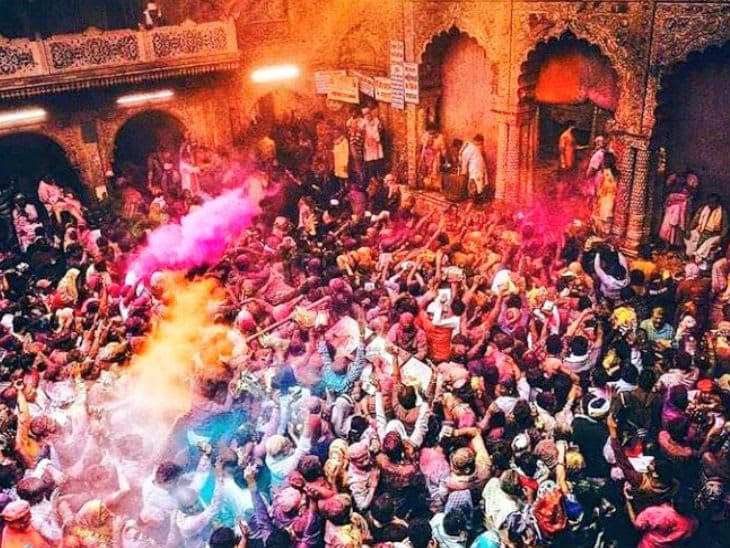
Vraj Ki Holi 2026: The Ultimate Guide to Holi in Mathura Vrindavan 2026
Plan Vraj Ki Holi 2026 with complete Braj Holi dates, Barsana Holi time, Mathura Vrindavan celebrations, travel tips & 40 days Holi details.

Published on
February 6, 2026
Hampi Festival 2026: Guide to Karnataka's Grandest Cultural Heritage Celebration
Discover the magic of Hampi Festival 2026. Explore dates, cultural events, and heritage sites at this UNESCO World Heritage celebration in Karnataka.

Published on
February 4, 2026
Surajkund International Craft Mela 2026 – Complete Travel & Visitor Guide
Checkout the complete guide of surajkund international mela 2026. Dates, tickets, venue, timings, partner nation Egypt, theme states, activities & travel detail

Published on
February 4, 2026
Lingaraj Temple Bhubaneswar Illuminated for Mahashivratri 2026
Lingaraj Temple in Bhubaneswar is illuminated ahead of Mahashivratri 2026 (15 Feb). Explore history, significance, rituals, and FAQs.