Heavy Snowfall Turns Badrinath and Kedarnath Into a Winter Wonderland
Early Winter Surprise in the Himalayas
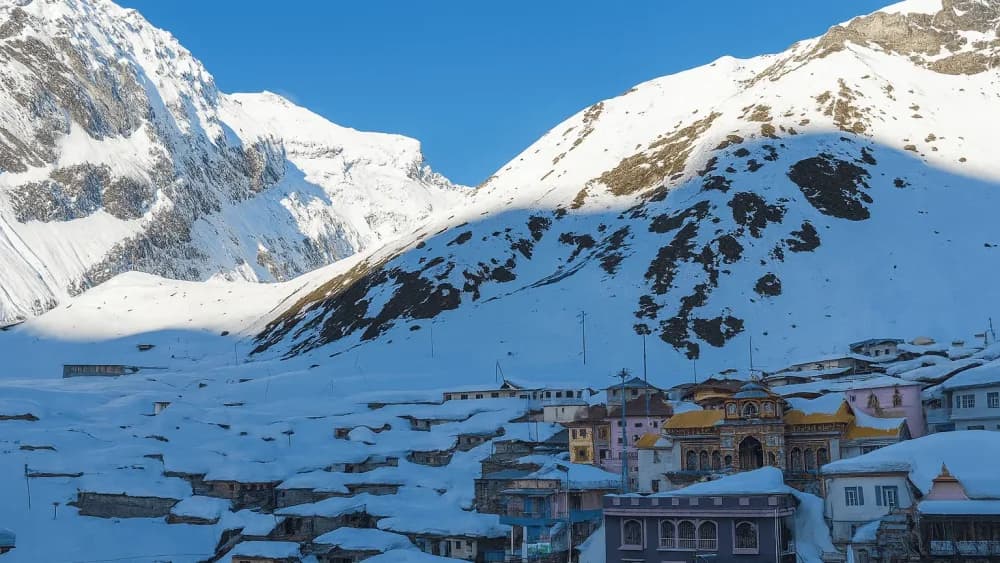
The higher regions of Uttarakhand woke up to a beautiful sight on Wednesday morning as thick layers of snow covered the mighty Himalayan peaks. The famous holy towns of Badrinath and Kedarnath turned completely white after a heavy spell of snowfall that began early in the morning.
For many pilgrims and travelers, it was a breathtaking moment to see the temples surrounded by shining white snow. The snowfall also marked the beginning of the winter season in these high mountains.
Snowfall Begins Before Dawn
According to officials, snowfall in the Badrinath Dham area began around 3 a.m. and continued for almost four hours, ending around 7 a.m. During this time, the entire temple complex, nearby mountains, and the roads leading to the temple were buried under a thick white sheet.
Sunil Purohit, the Executive Officer of the Badrinath Nagar Panchayat, said,
“The spell of snow that began at 3 am continued till around 7 am, leading to a sharp dip in temperature and heralding the onset of the winter season here.”
The temperature dropped sharply below freezing, and even the warm winds from the valleys couldn’t melt the snow quickly. People living in the area and the visiting devotees described the morning as peaceful, chilly, and magical.
Pilgrims Witness the First Snowfall
More than 1,000 pilgrims are currently visiting Badrinath despite the cold weather. Many of them said that the snowfall was an unforgettable experience.
Shubankar Chatterjee, a 45-year-old pilgrim from Kolkata, said,
“It was freezing cold, but we couldn’t resist stepping out to see the snow-covered temple. The view of Badrinath surrounded by snow was just heavenly.”
Pilgrims wrapped themselves in woolen clothes and blankets, clicked pictures, and prayed before the snow-covered temple. The entire temple complex looked like it was made of silver under the morning sunlight.
Snowfall Reaches Kedarnath Too
The snowfall was not limited to Badrinath alone. A similar scene was reported from Kedarnath Dham, another sacred temple dedicated to Lord Shiva.
The temple area, walking paths, and nearby mountains were all covered in snow. According to reports, the snowfall in Kedarnath started around the same time but lasted a bit longer than in Badrinath.
Hemant Dwivedi, President of the Badrinath-Kedarnath Temple Committee (BKTC), confirmed,
“The snowfall in Badrinath lasted for around four to five hours. While snow continues to be visible on the higher reaches around Badrinath, the Kedarnath shrine area experienced a slightly longer spell.”
Even after the heavy snowfall, all roads leading to Badrinath remain open, and pilgrims can continue their journey safely. Authorities have also confirmed that there is no immediate risk for visitors.
The portals (gates) of the Badrinath temple are scheduled to close on November 25, 2025, marking the end of the pilgrimage season.
Guarded Temples in the Snow
Even after the temples are closed for winter, they remain under strict watch. The Indo-Tibetan Border Police (ITBP) and the Badrinath-Kedarnath Temple Committee (BKTC) take care of both shrines throughout the year.
Anand Shukla, a temple priest from the Kedar Sabha, said,
“The shrine remains under the watch of the ITBP and BKTC members even after closure for the winter. The snowfall extended down to Garud Chatti this time.”
Their continuous presence ensures that the temples remain protected from extreme weather and any natural damage during the harsh winter months.
Beginning of the Winter Season
The recent snowfall marks the official beginning of winter in the high Himalayas. Such heavy snow is usually seen in late November or December, but this year, it arrived early.
For locals, it’s both a blessing and a challenge. On one hand, the snow brings scenic beauty and attracts tourists. On the other hand, it makes transportation and daily life difficult.
The temperature in Badrinath and Kedarnath has dropped below zero degrees Celsius, and the roads are slippery due to frozen ice. Authorities have asked travelers to drive carefully and to check weather updates before planning their visit.
A Magical Sight for Visitors
The sight of the snow-covered temples is nothing short of magical. The colorful flags, temple domes, and small houses look stunning against the backdrop of white snow and blue skies.
Many visitors say that the fresh snowfall made their journey even more spiritual. “Seeing Lord Vishnu’s home wrapped in snow felt divine. It’s like nature itself was offering prayers,” said another pilgrim from Delhi.
The snow also attracts photographers, vloggers, and travel influencers who are eager to capture this rare beauty. For social media users, pictures and videos of the snow-clad Badrinath and Kedarnath are already going viral.
Impact of the Snowfall
While the snowfall looks beautiful, it also impacts local life and work. Workers engaged in construction and road maintenance near Kedarnath have faced challenges due to slippery paths and freezing temperatures.
Authorities have arranged heaters, blankets, and hot food for workers who are still completing post-season repair work before the area closes for winter.
Tour operators have also informed that this early snowfall could boost winter tourism in the region, especially in nearby hill towns like Joshimath, Chopta, and Auli, where visitors come to see the snow.
Badrinath & Kedarnath Travel Advisory for Pilgrims
If you are planning to visit Badrinath or Kedarnath this month, here are a few important travel tips:
- Check weather updates before you leave. Sudden snowfall can block roads temporarily.
- Carry warm clothes – woolens, gloves, caps, and waterproof jackets are a must.
- Avoid night travel, as temperatures drop rapidly and fog reduces visibility.
- Follow local advisories issued by the Badrinath-Kedarnath Temple Committee (BKTC).
- Book accommodation in advance, as many lodges start closing by late November.
The Char Dham Yatra season is almost over, so pilgrims are advised to plan visits before November 25, when the temple gates officially close for winter.
Badrinath Temple – A Sacred Destination
The Badrinath Temple, dedicated to Lord Vishnu (Badrinarayan), is one of the most sacred Hindu temples in India. It is located in the Chamoli district of Uttarakhand, at an altitude of 3,133 meters (10,279 feet) above sea level, on the banks of the Alaknanda River.
The temple is one of the four main Char Dham pilgrimage sites, along with Dwarka, Puri, and Rameswaram, and also part of the Chhota Char Dham circuit (Badrinath, Kedarnath, Gangotri, and Yamunotri) in Uttarakhand.
It remains open for about six months every year (May to November), and closes during winter due to heavy snowfall.
History and Significance
According to Hindu mythology, Lord Vishnu meditated at Badrinath for thousands of years while sitting in the cold mountains. His consort, Goddess Lakshmi, took the form of a Badri tree to protect him from the harsh weather, which is why the place is called Badrinath – the Lord (Nath) of Badri.
The temple was originally built by Adi Shankaracharya, an 8th-century Hindu saint who revived Hinduism in India. The temple’s architecture is unique – about 50 feet tall with colorful wooden carvings and a golden roof.
Inside the temple, the main idol is a black stone statue of Lord Badrinarayan, seated in a meditative pose. Pilgrims believe that a visit here can wash away sins and grant salvation.
Important Facts About Badrinath Temple
- Location: Chamoli district, Uttarakhand
- Altitude: 3,133 meters (10,279 ft)
- Main Deity: Lord Vishnu (Badrinarayan)
- Built By: Adi Shankaracharya in the 8th century
- Temple Height: Around 50 feet
- Best Time to Visit: May to November
- Nearby Attractions: Tapt Kund, Mana Village, Charan Paduka, Vasudhara Falls
During the winter months, when the temple is closed, the idol of Lord Badrinarayan is moved to the Narsingh Temple in Joshimath, where prayers continue until the next season begins.
Kedarnath – The Abode of Lord Shiva
Kedarnath is another major Char Dham destination and one of the twelve Jyotirlingas of Lord Shiva. It is located at an altitude of 3,583 meters (11,755 ft) and surrounded by the beautiful Kedarnath mountain range.
The temple is believed to have been built by the Pandavas and later restored by Adi Shankaracharya. Like Badrinath, it also remains open for six months and closes during winter when snow makes the area inaccessible.
Why the Snowfall Matters
This early snowfall is not just a weather event—it marks the changing season in the Himalayas. It’s a reminder that nature continues its cycle, bringing beauty and challenges at the same time.
For the people living in the hills, it signals preparation time—storing food, fuel, and essentials before the roads close. For pilgrims and travelers, it is the last chance of the year to witness the divine Himalayan shrines before they close for winter.
The sight of snow-covered Badrinath and Kedarnath will stay in the hearts of devotees for years to come—a perfect blend of spirituality and nature’s wonder.
Conclusion
The recent snowfall in Uttarakhand has once again shown why the Himalayas are called “Dev Bhoomi” – the Land of the Gods. With Badrinath and Kedarnath blanketed in snow, the scene looks straight out of a postcard.
As winter arrives early this year, devotees, locals, and travelers all share one feeling — awe at the beauty and peace that the mountains bring.
The snow may be cold, but it fills every heart with warmth and faith.
FAQs
When did the snowfall start in Badrinath and Kedarnath?
How did the snowfall change the weather?
Are the temples still open for devotees?
Is it safe to travel to these places after the snowfall?
Why do these temples close in winter?
What are some nearby places tourists can visit?
Why is this snowfall special?
Your first trek isn’t about proving anything. It’s about experiencing something real. When you go with a Zentrail batch, you’re not just walking trails — you’re joining a tribe.
Still unsure?
DM us on Instagram or drop your questions in the comments below. Our past trekkers love helping first-timers.
Suggested News

Published on
February 14, 2026
Vraj Ki Holi 2026: The Ultimate Guide to Holi in Mathura Vrindavan 2026
Plan Vraj Ki Holi 2026 with complete Braj Holi dates, Barsana Holi time, Mathura Vrindavan celebrations, travel tips & 40 days Holi details.

Published on
February 6, 2026
Hampi Festival 2026: Guide to Karnataka's Grandest Cultural Heritage Celebration
Discover the magic of Hampi Festival 2026. Explore dates, cultural events, and heritage sites at this UNESCO World Heritage celebration in Karnataka.

Published on
February 4, 2026
Surajkund International Craft Mela 2026 – Complete Travel & Visitor Guide
Checkout the complete guide of surajkund international mela 2026. Dates, tickets, venue, timings, partner nation Egypt, theme states, activities & travel detail

Published on
February 4, 2026
Lingaraj Temple Bhubaneswar Illuminated for Mahashivratri 2026
Lingaraj Temple in Bhubaneswar is illuminated ahead of Mahashivratri 2026 (15 Feb). Explore history, significance, rituals, and FAQs.