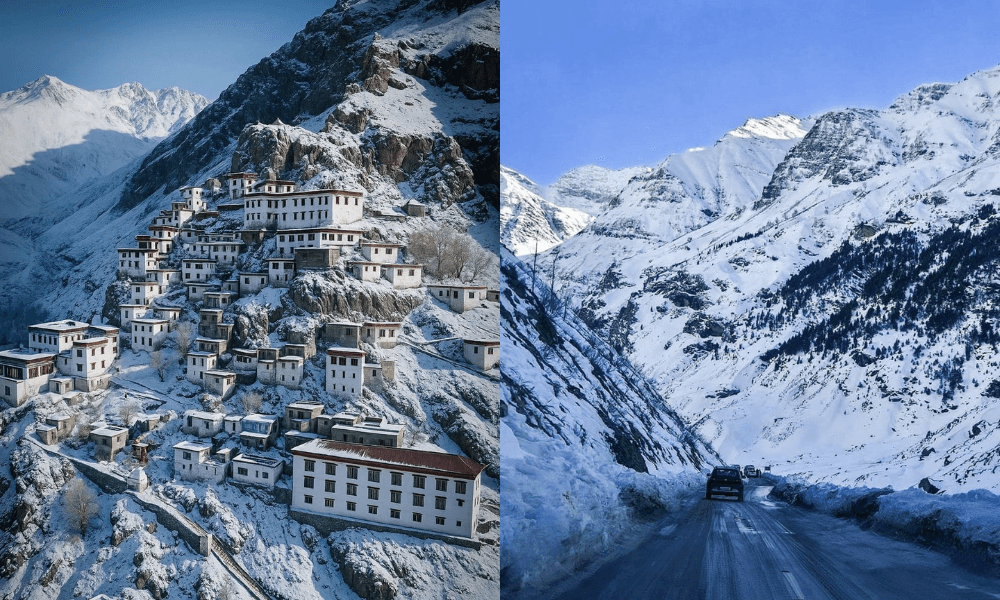
DO YOU KNOW? Spiti Valley Crowned as India’s Coldest Desert Biosphere Reserve by UNESCO
DO YOU KNOW? Spiti Valley Crowned as India’s Coldest Desert Biosphere Reserve by UNESCO
Spiti (Himachal Pradesh): In a landmark move for conservation and travel alike, the high-altitude, starkly beautiful terrain of Spiti in the Lahaul–Spiti district has been officially declared India’s first Cold Desert Biosphere Reserve in India under UNESCO’s Man and the Biosphere (MAB) Programme. The announcement was made during the 37th International Coordinating Council (MAB-ICC) meeting held in Hangzhou, China from 26-28 September 2025.
Coldest Desert Biosphere Reserve Range
The Spiti Cold Desert Biosphere Reserve spans a vast geographical area of 7,770 sq km, making it one of India’s largest biosphere reserves.
It stretches across altitudes ranging from 3,300 m to 6,600 m in the Trans-Himalayan rain-shadow zone.
- Core Zone: ~2,665 sq km
- Buffer Zone: ~3,977 sq km
- Transition Zone: ~1,128 sq km
One of the Coldest and Driest Ecosystems on UNESCO List
This region is among the coldest and driest ecosystems in the UNESCO World Network of Biosphere Reserves (WNBR).
With this inclusion, India now boasts 13 biosphere reserves in UNESCO’s global network — placing Spiti firmly on the world conservation and travel map.
India’s Cold Desert Biosphere Reserve: Region & Ecosystem
The reserve lies entirely within Himachal Pradesh’s Lahaul–Spiti district, encompassing celebrated protected areas such as:
- Pin Valley National Park
- Kibber Wildlife Sanctuary
- Chandratal Wetland
- Sarchu Plains
The terrain combines windswept plateaux, glacial valleys, alpine lakes, and desert habitats — making it one of the most visually unique ecosystems in Asia.
Cold Desert Biosphere Reserve’s Wildlife & Communities
- Flora: Hundreds of herbs, shrubs, and medicinal plants — many endemic to the region.
- Fauna: Home to the snow leopard, Himalayan ibex, blue sheep, Himalayan wolf, and several high-altitude bird species.
- Communities: Around 12,000 residents live in scattered villages, practicing yak/goat herding, barley-pea farming, and preserving Sowa Rigpa (Tibetan medicine) and Buddhist monastic traditions.
Implications for Travel & Tourism
This recognition gives Spiti a new eco-tourism identity — promoting extreme-climate adventure and conservation-based travel.
Travelers planning Delhi-to-Spiti or Manali-Spiti loops can expect stricter conservation norms and more guided travel options.
Popular eco-tour highlights:
- High-altitude treks across Kaza, Kibber, Langza, and Hikkim
- Visiting ancient monasteries (Key, Tabo, Dhankar)
- Photography tours of frozen landscapes and night skies
For tour packages:
Explore one of India’s coldest deserts, now globally recognized by UNESCO — travel responsibly and sustainably with Zentrail uncoming Himachal Pradesh Tour and trek in India.
Challenges & Outlook
With recognition comes responsibility — Spiti now faces the challenge of sustainable tourism, climate adaptation, and community involvement.
- Climate change & glacial retreat threaten fragile desert ecosystems.
- The new status opens avenues for research, international collaboration, and eco-infrastructure funding.
- Local communities are key to the reserve’s success — balancing tourism growth with ecosystem protection.
Stay tuned to Zentrail Travel News for further updates on India’s cold desert travel stories, eco-tourism planning and hidden Himalayan gems.
FAQs
Which national park is located in the Cold Desert?
Why is it important for tourism?
What does this recognition mean for local communities?
Which is Asia’s second-largest Biosphere Reserve?
Where is Spiti Valley located in India?
Is there any tour or trek to Spiti in India?
Your first trek isn’t about proving anything. It’s about experiencing something real. When you go with a Zentrail batch, you’re not just walking trails — you’re joining a tribe.
Still unsure?
DM us on Instagram or drop your questions in the comments below. Our past trekkers love helping first-timers.
Suggested News


Published on
February 14, 2026
Vraj Ki Holi 2026: The Ultimate Guide to Holi in Mathura Vrindavan 2026
Plan Vraj Ki Holi 2026 with complete Braj Holi dates, Barsana Holi time, Mathura Vrindavan celebrations, travel tips & 40 days Holi details.

Published on
February 6, 2026
Hampi Festival 2026: Guide to Karnataka's Grandest Cultural Heritage Celebration
Discover the magic of Hampi Festival 2026. Explore dates, cultural events, and heritage sites at this UNESCO World Heritage celebration in Karnataka.

Published on
February 4, 2026
Surajkund International Craft Mela 2026 – Complete Travel & Visitor Guide
Checkout the complete guide of surajkund international mela 2026. Dates, tickets, venue, timings, partner nation Egypt, theme states, activities & travel detail

Published on
February 4, 2026
Lingaraj Temple Bhubaneswar Illuminated for Mahashivratri 2026
Lingaraj Temple in Bhubaneswar is illuminated ahead of Mahashivratri 2026 (15 Feb). Explore history, significance, rituals, and FAQs.